Ver post de Panes

(Español) Pan de Espelta

fortgeschritten
Schwierigkeit
18s
Vorbereitung
47m
Kochzeit

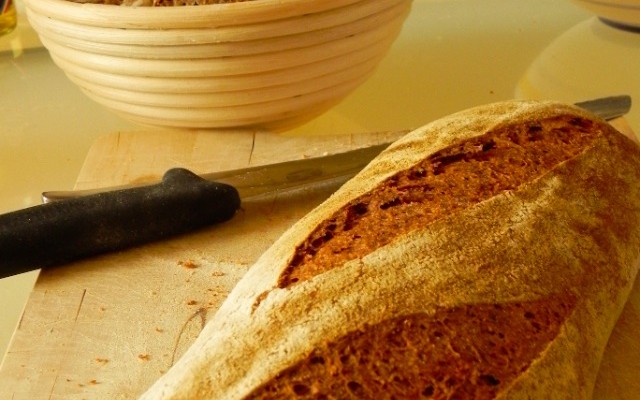
Today I want to tell you a bit about Spelt and give you this recipe of a Spelt sourdough bread made with rye and wheat sourdough. A bread with a special soury, nutty and sweet taste and with unique properties given by this special grain.

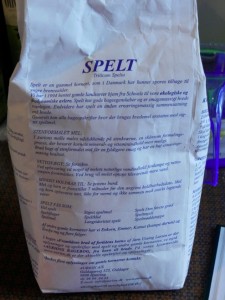
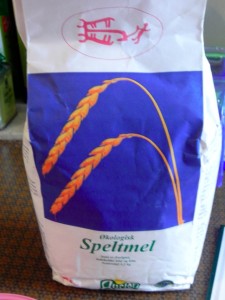
Speltmel, spelt flour, dinkelmehl, espeltaT. spelta is part of the wheat family  (Triticum). This grain started to be grown in southern Germany since the year 4000 bc, but there is evidence that it started to be grown in Asia from 7000 bc. Today, it is popular in northern Europe, specially Germany, Switzerland and France.

Spelt is characterized by having high amounts of protein (17%), a moderatelly strong gluten quality but not so elastic. It is usually recommende to mix the spelt flour with normal wheat (T. aestivus) or other wheats that give a strong gluten if you’d like to have as a result a bread with a non-compact structure.

Comparing it to common wheat, spelt has a higher carbohydrate, protein, fibre, vitamin B1 and B2, plus a higher amount of minerals and aminoacid content. It provides a sweet and nutty taste to bread. It is highly soluble in water and easy to digest.

A special property is that the grain has a very strong skin, dificult to eliminate providing a high resistance to plagues and diseases, making it an ideal cereal for ecological growth, due to its natural resistance without the need to use transgenic seeds or pesticides.

Spelt is therefore the most ancient wheat grain, with no genetic modifications since its use, a high resistance to plagues, perfect for ecological growth, with excellent nutritional properties and which also provides a unique taste to bread.

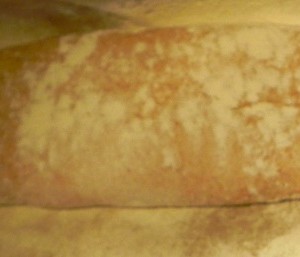
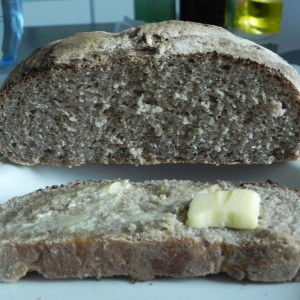
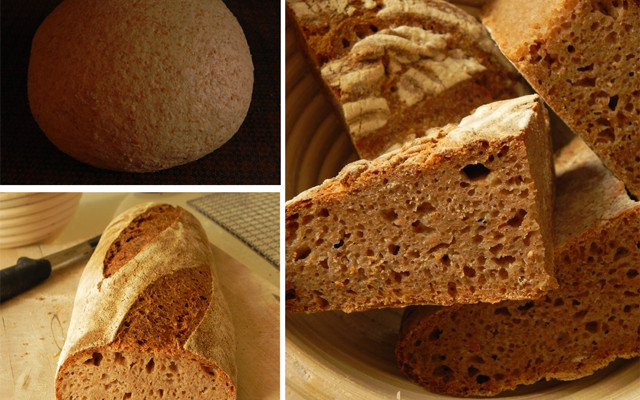
pan de espeltaSo, what are you waiting for? Go buy it and bake this delicious bread. It goes really well with strong cheeses with umami taste and honey and sweet marmalades. This bread has to sourdoughs, common wheat flour (95), rye flour (9%) and 82% spelt flour. This flour I bought in August in Copenhague. It comes from an ecological growth and the grain comes from the recovery of ancient grains since 1994 that have returned from Switzerland to the biodynamic and organic farmers in Denmark. A bread whose taste makes us travel in time.

Ingredients. Makes 1,5 kg. Hydration 68%.

  • 150 gr rye sourdough hydrated 100%
  • 150 gr common wheat sourdough hydrated 100%
  • 732 gr spelt flour
  • 450 gr water
  • 18 gr salt

Preparation.

pan de espelta

  1. The day before start feeding your sourdoughs to render a bit more than 150 gr so that yoou in the fridge for future breads.

    Rememeber that every sourdough starter is unique and will be needing from different times after each fed. So you must calculate with enough time how much you’ll have to feed it with, from which time up to what time, etc. so that when you want to start with the bread the next day it will be at its maximum volume and ready to use.

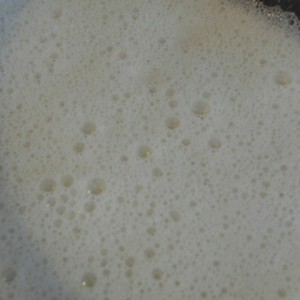
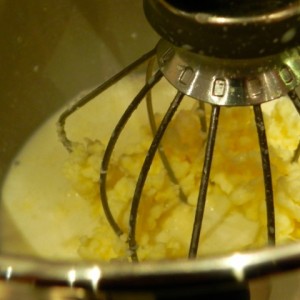
  1. Mix both startes with the water, using a hand whisker.
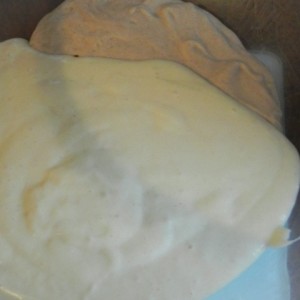
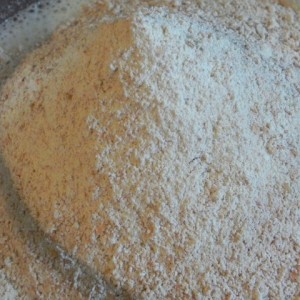
  2. Add the spelt flour and mix well with both hands until there are no lumps in the dough.
  3. Leave 20-30 minutes. Autolisis.
  4. Add the salt and knead on a lightly oiled surface. You can add a bit of oil to your hands to prevent the dough from sticking.
  5. The kneading should be short, 10-20 seconds and let it rest for 10 minutes, 20, 30, 1 hour.
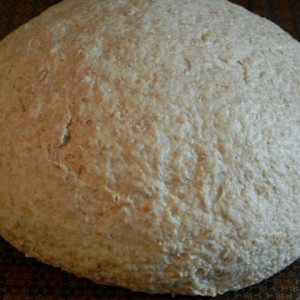
  6. Window-pane test. If the dough is ready, form a ball and let it rest covered in a lightly oiled bowl until it doubles its volume.
  7. Divide the dough into the amount of breads you’d like to make. I prepared a 1 kg batard and a 500 gr ball. Let it rest 10 minutes before shaping.
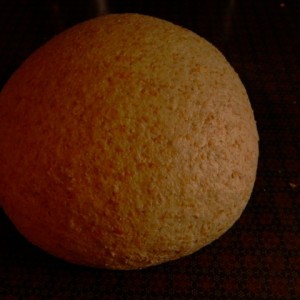
  8. Shape the ball in a surface with no oil or flour because we want to generate surface tension on the bottom of it so that it grows well during the second fermentation phase.
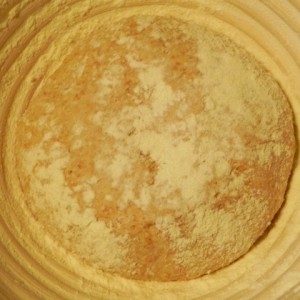
  9. Place in a bread basket with flour and rest until it doubles its volume. To make the batard, take a look at these two videos, the last one also shows how to shape the ball.

Baking:

  1. Cuando ya han doblado volumen, precalentar el horno a 235ºC durante media hora.
  2. Pondremos la masa sobre una bandeja, sobre la que habremos puesto una lámina de papel de hornear con harina. Realizamos los cortes rápidamente con un buen cuchillo o cuchilla de afeitar.
  3. Meteremos el pan en el horno, deslizando la masa sobre la bandeja o piedra caliente del horno.
  4. Durante los primeros 12 minutos de horneado abrir un poco la puerta del horno cada dos minutos y con un vaporizador echar agua sobre las paredes del horno.

    Ésto se hace para que la masa no se seque, tenga capacidad de expansión y también para la generación de una corteza más fina. Si quieres un pan más rústico, puedes prescindir de él o hacerlo menos seguido.

  5. Después de los 12 minutos, bajamos la temperatura a 220ºC, y horneamos durante 35-40 minutos más.
  6. Al finalizar la cocción, comprobaremos que la base del pan suena a hueco. Ésto indica que se ha secado debidamente.
  7. Poner sobre una rejilla durante por lo menos una hora.
  8. Cortar, comer, disfrutar!!

This entry was posted in Panes and tagged , , , , , , , , , , , , , , , , . Bookmark the permalink.