Ver post de Creative

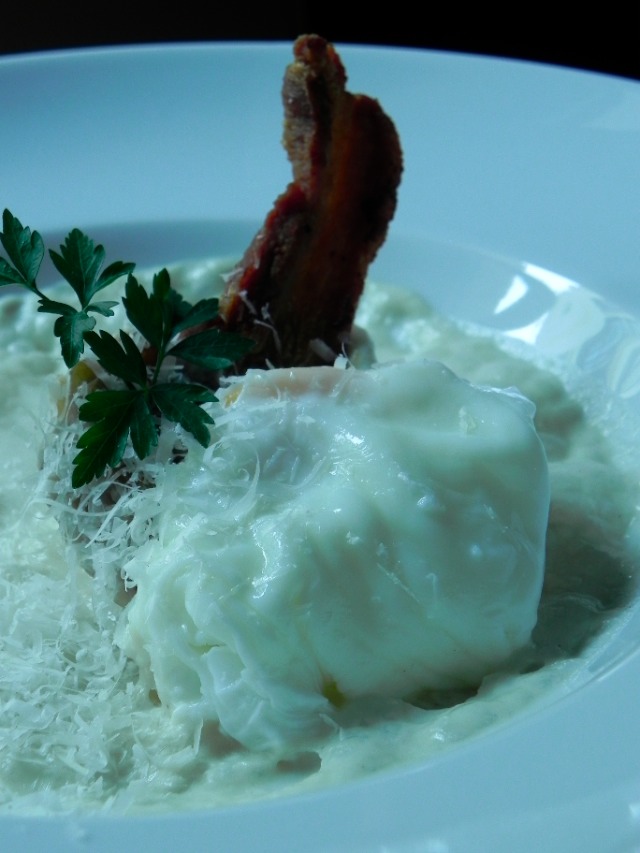
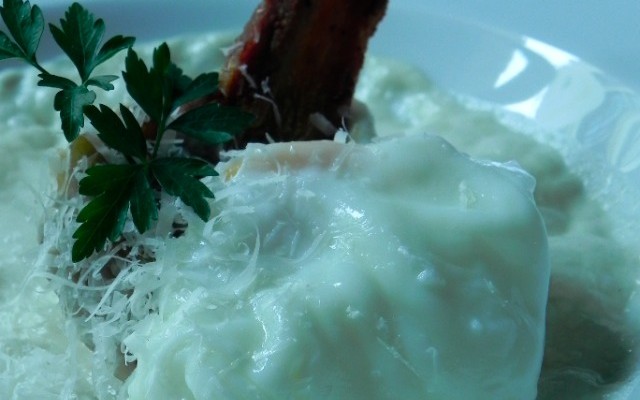
Poached egg over artichoke textures topped with crispy pancetta and Parmigiano Reggiano

4 people
Number of Diners
Advanced
Difficulty Level
1h 30m
Cooking Time

Oh yes, with this dish I’m going up on elegance and more for sure. Thought for my future menu and experimenting for the first time with foams and textures; reading about flavour combinations and cooking methods. This plate has travelled from Julia Child’s artichoke bottoms cooked in a ‘blanc’ (‘like it used to be done’), to an artichoke foam accomplished with Ferran Adrià’s ISI Gourmet Syphon. Over these two textures a poached egg and to enhance flavour crispy pancetta and some Parmigiano Reggiano. This is harmony ladies and gentlemen.

Huevo escalfado sobre alcachofa en dos texturas crujiente de panceta y Parmigiano Reggiano

Ingredients. For 4.

  • 12 fresh artichokes, the biggest you can find. If they are not so big then you will be needing 16, 8 of which will be bottoms and the rest for the foam.
  • 4 eggs, best quality and very fresh
  • 100 gr of pancetta
  • Parmigiano Regianno cheese
  • 3 lemons
  • 1/2 onion finely sliced
  • 200 gr of cream 35.1% grease
  • 100 gr water and 100 of the broth form the artichokes
  • 30 gr butter
  • 3 gr agar-agar
  • 1/2 litre ISI-Gourmet syphon
  • vinager
  • salt, pepper and nutmeg

Preparation.

Let’s take it by steps.

1. Artichokes. Day before.

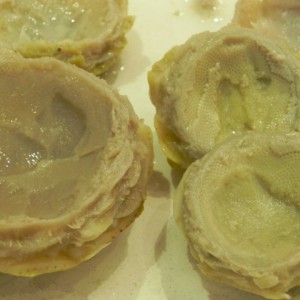
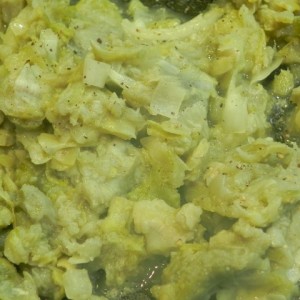
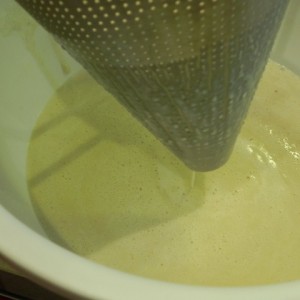
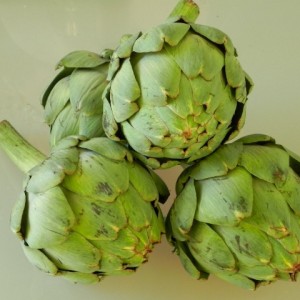
AlcachofasArtichoke bottomsBlancArtichoke hearts Cooking artichokes with onions Artichoke cream for foam

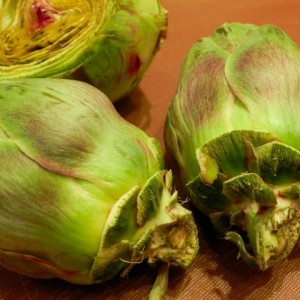
  1. First you need to pick up the 4 biggst artichokes because we need the biggest bottoms or hearts, where the poached egg will be layed on. If they are smal there will be 2 per plate. These ones we will prepare as Julia Child did, ‘as done before’ a friend told me: in a blanc.
  2. First break the stem off close to the base of the artichoke. Holding the bottom up, bend a lower leaf back until it snaps. Then pull it off. Continue until you’ve gone beyond the curse, where the cones of leaves folds inward.
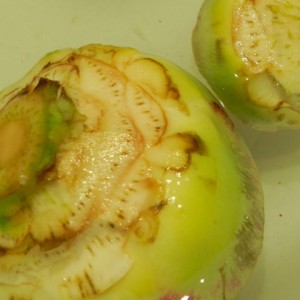
  3. Cut off remaining cone of leaves close above the top of the artichoke bottom. Immediately rub with lemon to prevent it from oxidizing and turning brown.
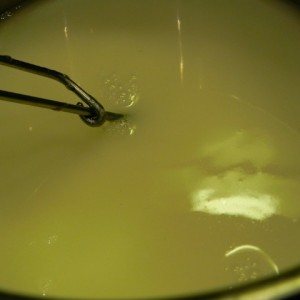
  4. Cook in a blanc: 1/2 lemon, 1/4 cup of flour, 1 1/2 teaspoon of salt and a litre of water. Once the flour has dissolved well with the water add the rest of ingredients and bring to a boil. Lower the heat and add the artichoke bottoms. Cook for about 30 to 40 minutes until tender when pierced with a knife. If you’re not going to use them right away preserve them on the blanc adding oil to the top. This we will do to use the next day.Before using with a spoon remove the choke and trim the remaining leaf ends.

For all the other artichokes:

  1. At the same time we are cooking the bottoms in a blanc, wash well all the other artichokes removing spare leaves, and add to 4 litres of water with the juice of 2 lemons. Bring to a boil and cook for 30 to 40 minutes. If you have a cheesecloth cover them with it while cooking. This will give the exposed parts humidity and will prevent them from browning.
  2. Reserve for next day.

2. Artichoke foam. Next day.

  1. Remove all the meat from the artichokes including the hearts and leaves.
  2. Melt the butter and add the onions. Cook at low heat.
  3. Add the artichokes “meat”. Salt, pepper and nutmeg.
  4. Cook for 5 more minutes, add the cream and turn off the heat.
  5. We pass this to a bowl where we will add the water and artichoke’s broth.
  6. Taste for salt and pepper.
  7. Blend very well.
  8. Add the agar-agar well dissolved (you have to bring it to a boil).
  9. Pass over a sieve, very important: the cream should have no solids it can damage the syphon. Add to the syphon of 1/2 litre and 2 loads, shaking it well between each load.
  10. Place the syphon at ‘bain marie’ 70ºC until ready to serve.

3. Crispy pancetta:

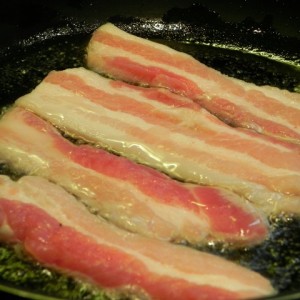
  1. Cut the pancetta strips in half if they are too thick (longwise).Crispy pancetta
  2. Fry it in oil until its very crispy.
  3. Reserve in the oven and preserve the pan with a little oil. Recycle the rest!

4. Poached eggs:

  1. In a tall and not too wide skillet bring water to a boil.
  2. For every litre of water and 1 teaspoon of sal and about 2 tablespoons of vinegar. They will help the whites to coagulate faster.
  3. Once the water starts boiling reduce the heat a bit so that it is not boiling strongly, otherwise the whites could break.
  4. First place the egg over a small bowl and slide the egg into the water carefully.
  5. With a spoon helpp shaping every now and then. Cook for about 4 minutes.
  6. Once cooked, transfer into cold water. This will stop the egg from cooking and will take away the vinegar.

And now presentation of the plate:

  1. While the egg is cooking, in the pancetta pan warm the artichoke bottoms.
  2. Place in a deep plate first (and shaking well) the artichoke foam.
  3. Over it and in the center, place the artichoke heart and the poached egg on top.
  4. Serve with the crispy pancetta and some grated Parmigiano Reggiano.
  5. Decorate with parsley.

Enjoy!

Poached egg over artichoke foam

  1. Ponemos 1 litro de agua a hervir con el zumo de medio limón y … de harina.
  2. A la vez ponemos a hervir el resto de las alcachofas bien lavadas en otra olla con 4 litros de agua. Si tienes un paño que respire, típico de quesos, ponlo por encima. Esto hará que se mantengan húmedas durante la cocción y no se negreen por arriba.
  3. Cocinar por aproximadamente 40 minutos.

This entry was posted in Creative, Starters, Eggs, Soups and Creams and tagged , , , , , , , , , , , , , . Bookmark the permalink.
  • Petis

    Qué delicioso!!! Petis goes sofistiqué…
    Ahora eso de “emplatar” nada sofistiqué, por favor no usar ese término absurdo!!!

  • borja

    Pero qué barbaridad!. Nivelazo!

    • http://www.monitouille.com/ Monica

      :)