
-
Categories
- German
- Árabe
- Arequipeña
- Rices and grains
- Poultry
- Meats
- Cheesecakes
- Chifa
- Creative
- Criolla
- Breakfast and Brunchs
- Salads
- Starters
- Spanish
- Events and Restaurant reviews
- French
- Fusion
- Eggs
- Inglesa
- Italian
- Mexican
- Nikkei
- North American
- Breads
- Pasta
- Peruvian
- Fish and seafood
- Appetizers
- Desserts
- Preparaciones de base
- Dairy products
- Russian
- Sauces
- Sandwichs
- Soups and Creams
- Vegetarian
-
Blog: Monitouille Topics:Cooking, Recipes, Peruvian
Tag Archives: flour
Ver post de Breads
Advanced
18h
47m
Speltbread
Difficulty Level
Preparation Time
Cooking Time
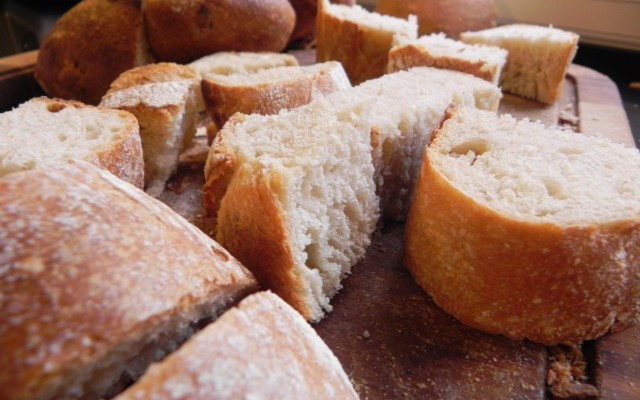
Today I want to tell you a bit about Spelt and give you this recipe of a Spelt sourdough bread made with rye and wheat sourdough. A bread with a special soury, nutty and sweet taste and with unique properties given by this special grain.
T. spelta is part of the wheat family (Triticum). This grain started to be grown in southern Germany since the year 4000 bc, but there is evidence that it started to be grown in Asia from 7000 bc. Today, it is popular in northern Europe, specially Germany, Switzerland and France.
Spelt is characterized by having high amounts of protein (17%), a moderatelly strong gluten quality but not so elastic. It is usually recommende to mix the spelt flour with normal wheat (T. aestivus) or other wheats that give a strong gluten if you’d like to have as a result a bread with a non-compact structure.
Comparing it to common wheat, spelt has a higher carbohydrate, protein, fibre, vitamin B1 and B2, plus a higher amount of minerals and aminoacid content. It provides a sweet and nutty taste to bread. It is highly soluble in water and easy to digest.
A special property is that the grain has a very strong skin, dificult to eliminate providing a high resistance to plagues and diseases, making it an ideal cereal for ecological growth, due to its natural resistance without the need to use transgenic seeds or pesticides.
Spelt is therefore the most ancient wheat grain, with no genetic modifications since its use, a high resistance to plagues, perfect for ecological growth, with excellent nutritional properties and which also provides a unique taste to bread.
So, what are you waiting for? Go buy it and bake this delicious bread. It goes really well with strong cheeses with umami taste and honey and sweet marmalades. This bread has to sourdoughs, common wheat flour (95), rye flour (9%) and 82% spelt flour. This flour I bought in August in Copenhague. It comes from an ecological growth and the grain comes from the recovery of ancient grains since 1994 that have returned from Switzerland to the biodynamic and organic farmers in Denmark. A bread whose taste makes us travel in time.
Posted in Breads
Tagged Germany, batard, bola, características de la espelta, centeno, espelta, fermentación, grano, flour, historia de la espelta, sourdough, nutrición, bread, step by step, recipe, rústico, trigos
Leave a comment
Ver post de Breads
Bread course with Javier Marca
Since my friend “La Chola” joined the wonderful universe of bread and transmitted me his absolut pleasur for sourdough, I’ve been wanting to learn more and more about how bread is made and how can I make my 100% ecologic and authentic home-made sourdough bread.
This past Sunday was a day filled with life. I took a bread course here in Madrid with baker Javier Marca, which by the way has a great blog that you should check out (Madrid Tiene Miga). Javier reminded me again of Jonathan (“La Chola”). It was fascinating to see that this whole passion for bread and to recover bread is BIG and that I, undoubtedly, am starting to feel it.
I can’t wait to have my own sourdough and to start making baguettes, sandwich bread, french bread for peruvian sandwiches, rye bread with seeds, quinoa bread, yuca bread, brioche, christmas “roscón” that me and Teresita talked about doing, croissants and any bread I can think of. Because I know everything is possible! It only takes energy, will to get your hands a bit sticky and hunger to eat good bread.
I leave you the pictures of the course and Javier’s bread. Next post a delicious brunch we ate with the bread I prepared on the course.
more photogrpahs here!


